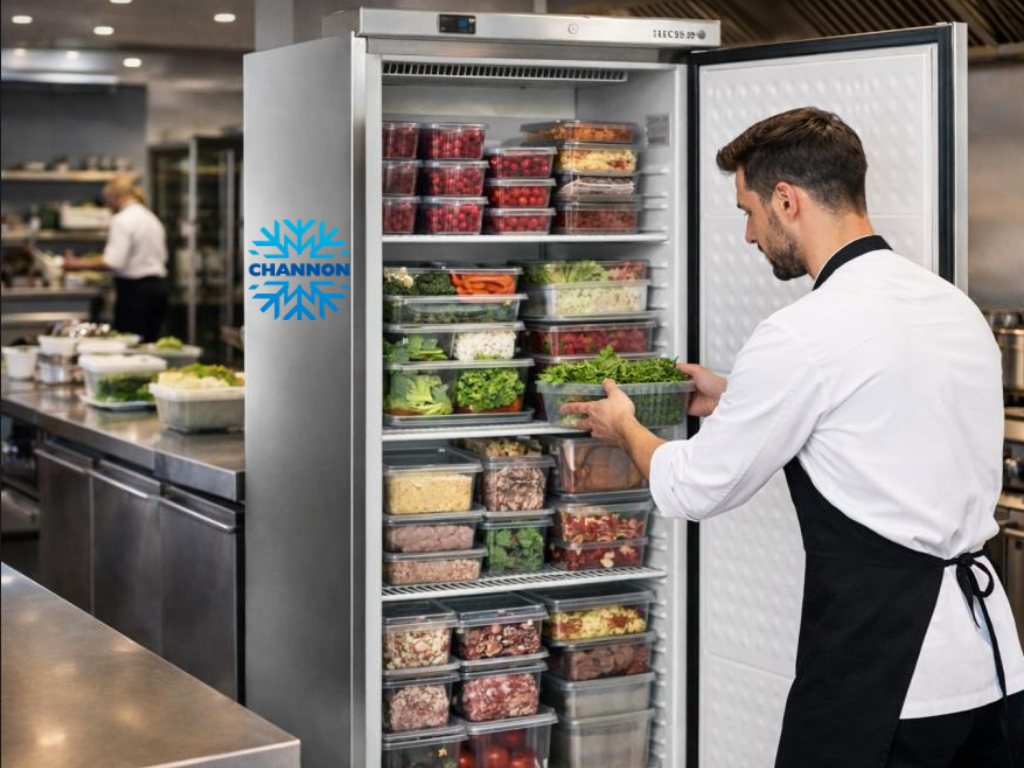
Keeping food at the correct temperature is an essential responsibility for Australian hospitality businesses. Whether you operate a café, restaurant, catering business or food retail store, suitable commercial refrigeration equipment helps maintain safe storage conditions and protect food quality.
However, food safety involves more than simply placing products inside a refrigerator. Businesses also need to check food temperatures, organise storage correctly, maintain equipment and respond appropriately when cooling performance changes.
Different refrigeration systems serve different purposes, from underbench refrigerators used during food preparation to larger freezers and cool rooms designed for bulk storage.
This guide explains Australian food safety temperature requirements, practical refrigeration checks and what to consider when selecting suitable equipment for your business.
Why Is Commercial Refrigeration Important for Food Safety?
How Commercial Refrigeration Equipment Supports Safe Storage
Refrigeration helps slow the growth of harmful microorganisms in food that requires temperature control.
Potentially hazardous foods include meat, seafood, dairy products, cooked rice, prepared salads and certain ready-to-eat meals.
These foods require appropriate handling because unsuitable storage conditions may allow harmful microorganisms to multiply or produce toxins.
Commercial refrigerators, freezers and cool rooms help businesses maintain different storage conditions depending on the products involved.
For example, a café may use an underbench refrigerator for ingredients accessed during service, while a restaurant may need an upright cabinet for additional chilled storage.
The right equipment depends on food quantities, kitchen activity and temperature requirements.
Commercial refrigeration equipment must also have sufficient usable capacity and be operated according to the manufacturer’s instructions.
A refrigerator that is too small for daily stock requirements may create storage and airflow difficulties.
Understanding Australian Food Safety Temperature Requirements
Australian food safety standards generally require potentially hazardous food to be kept at 5°C or colder, or 60°C or hotter.
The range between 5°C and 60°C is commonly called the temperature danger zone because harmful microorganisms may multiply more readily within this range.
Alternative temperature controls may be permitted when a business can demonstrate that the food remains safe.
Food intended for frozen storage must remain frozen. Although -18°C or colder is a common freezer operating target, it is not a universal legal temperature requirement for every frozen product.
Businesses should also follow relevant manufacturer storage instructions.
Commercial refrigeration equipment supports these requirements, but correct equipment operation does not automatically establish food safety compliance.
Staff need to understand the temperatures appropriate for their products and how to verify them.
What Refrigeration Temperatures Should Food Businesses Monitor?
Checking Actual Food Temperatures With a Thermometer
A refrigerator display does not necessarily show the temperature inside the food.
The display may indicate cabinet air temperature or a reading from an internal equipment sensor.
Actual food temperature can differ, particularly when cabinets are opened frequently or contain recently delivered products.
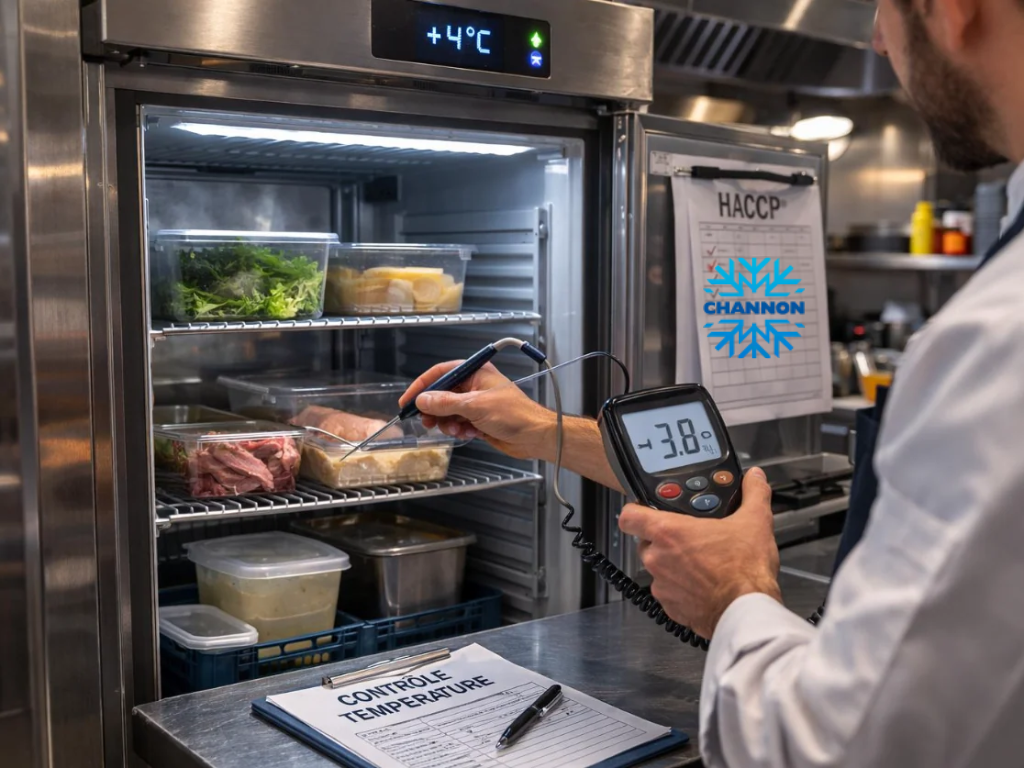
Businesses handling potentially hazardous food must have access to a thermometer accurate to within 1°C.
A suitable probe thermometer can be used to measure the temperature inside food, following appropriate procedures.
The probe should be cleaned and sanitised between relevant uses to reduce cross-contamination risks.
Staff should also check that the thermometer is working accurately and follow the manufacturer’s maintenance guidance.
For packaged foods, an appropriate non-invasive measurement method may be used where necessary.
Checking actual food temperatures provides more useful information than relying entirely on the refrigerator’s digital display.
Why Commercial Refrigeration Equipment Needs Routine Checks
Refrigeration performance can change throughout a busy working day.
Frequent door openings, excessive stock levels and inadequate ventilation may affect how effectively equipment maintains temperature.
A crowded preparation refrigerator may also struggle to maintain suitable conditions if food containers restrict airflow.
Businesses should establish temperature checks that reflect the food handled and their operating procedures.
This may include checking food temperatures, reviewing equipment readings and responding to alarms.
Temperature records can help identify recurring problems or changes in cooling performance.
Some food service businesses must also maintain evidence of particular food safety controls under Standard 3.2.2A.
The applicable requirements depend on the business’s activities.
Regular checks help staff identify potential problems rather than assuming equipment is functioning correctly because its display is illuminated.
How Can Businesses Store Food Safely in Commercial Fridges?
Organising Ingredients to Reduce Cross-Contamination
Safe refrigeration requires suitable food organisation as well as temperature control.
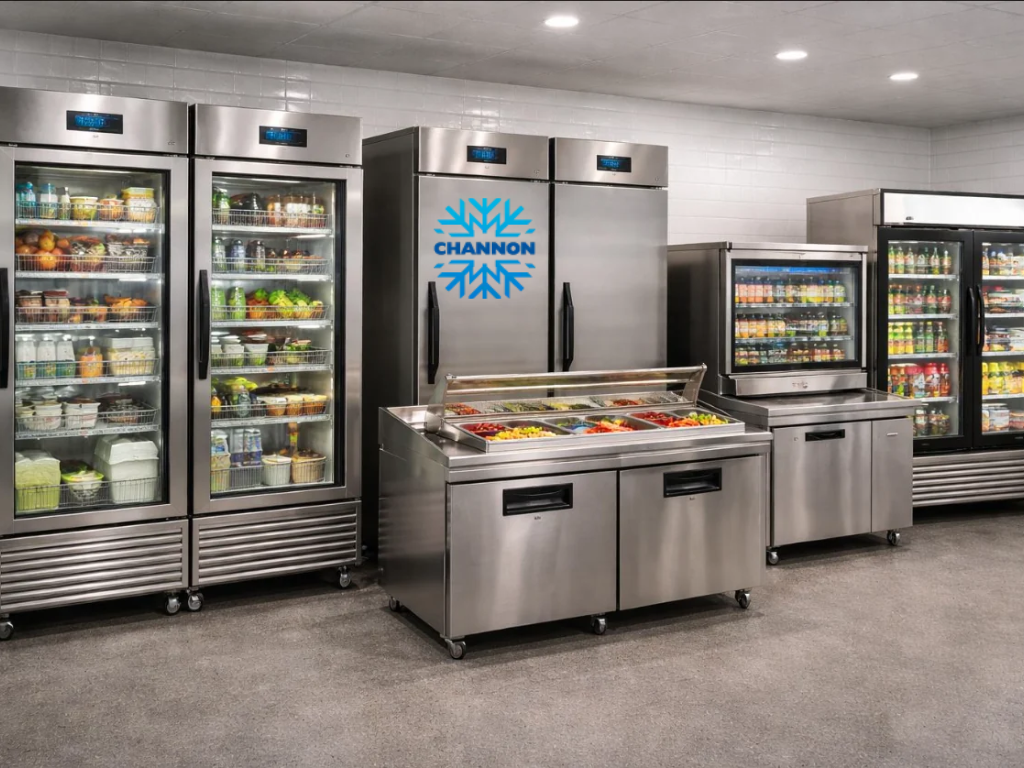
Raw meat, poultry and seafood should be stored separately from ready-to-eat foods to reduce contamination risks.
Where appropriate, raw products should be placed below ready-to-eat items so juices cannot drip onto prepared food.
Food-grade containers and suitable coverings help protect ingredients during storage.
Clear labelling can also help staff identify products, preparation dates and relevant storage instructions.
Stock rotation is important because older products should be used within their applicable shelf-life limits.
A first-in, first-out approach can help organise stock, but businesses must still follow use-by dates and food safety requirements.
Commercial refrigeration equipment should provide sufficient space for food to be separated and stored in an organised manner.
A well-planned storage arrangement makes everyday food handling easier for kitchen staff.
Maintaining Airflow and Suitable Storage Capacity
Commercial refrigerators rely on airflow to maintain suitable internal conditions.
Overloading shelves or blocking internal air circulation can affect temperature performance.
Food should be arranged according to the equipment manufacturer’s instructions, allowing appropriate space around ventilation openings.
Kitchen staff should also avoid leaving refrigerator doors open longer than necessary.
Another important consideration is how freshly cooked food is cooled before storage.
Australian food safety requirements generally require cooked potentially hazardous food to cool from 60°C to 21°C within two hours, then from 21°C to 5°C within a further four hours, unless a demonstrated safe alternative process is used.
Large quantities may require shallow containers, smaller portions or specialised cooling equipment.
A standard storage refrigerator should not be assumed capable of rapidly cooling large volumes of hot food.
What Maintenance Helps Commercial Refrigeration Work Properly?
Cleaning Refrigerators, Door Seals and Ventilation Areas
Regular cleaning helps maintain hygienic food storage conditions and supports equipment performance.
Internal shelves, food contact surfaces and storage compartments should be cleaned according to suitable procedures.
Door seals also deserve attention.
Damaged or poorly fitting seals may allow warm air to enter the cabinet, affecting cooling performance.
Staff should check for visible damage and report seals that no longer close properly.
Ventilation openings and accessible external surfaces should remain free from avoidable obstructions.
Depending on the equipment, condenser cleaning or other technical maintenance may require professional servicing.
Commercial refrigeration equipment should always be maintained according to manufacturer guidance.
Staff should not attempt electrical repairs or work on refrigeration circuits unless they are appropriately qualified and authorised.
Recognising Cooling Problems Before They Become Serious
Refrigeration equipment may show warning signs when its performance changes.
Unusual temperature readings, repeated alarms, excessive ice accumulation and inconsistent cooling are reasons to investigate.
Damaged door seals or unusual equipment noise may also indicate maintenance concerns.
These symptoms can have different causes, so businesses should avoid assuming that one component is responsible.
If food temperatures are affected, staff must follow appropriate food safety procedures while the problem is investigated.
Recording temperature changes and fault symptoms can help a refrigeration technician understand what has occurred.
Commercial refrigeration equipment requires suitable maintenance, but servicing cannot guarantee that every breakdown will be prevented.
The goal is to identify problems promptly and manage risks before they affect larger quantities of stored food.
What Should You Do When Refrigeration Temperatures Become Unsafe?
Responding to Refrigerator Breakdowns and Temperature Changes
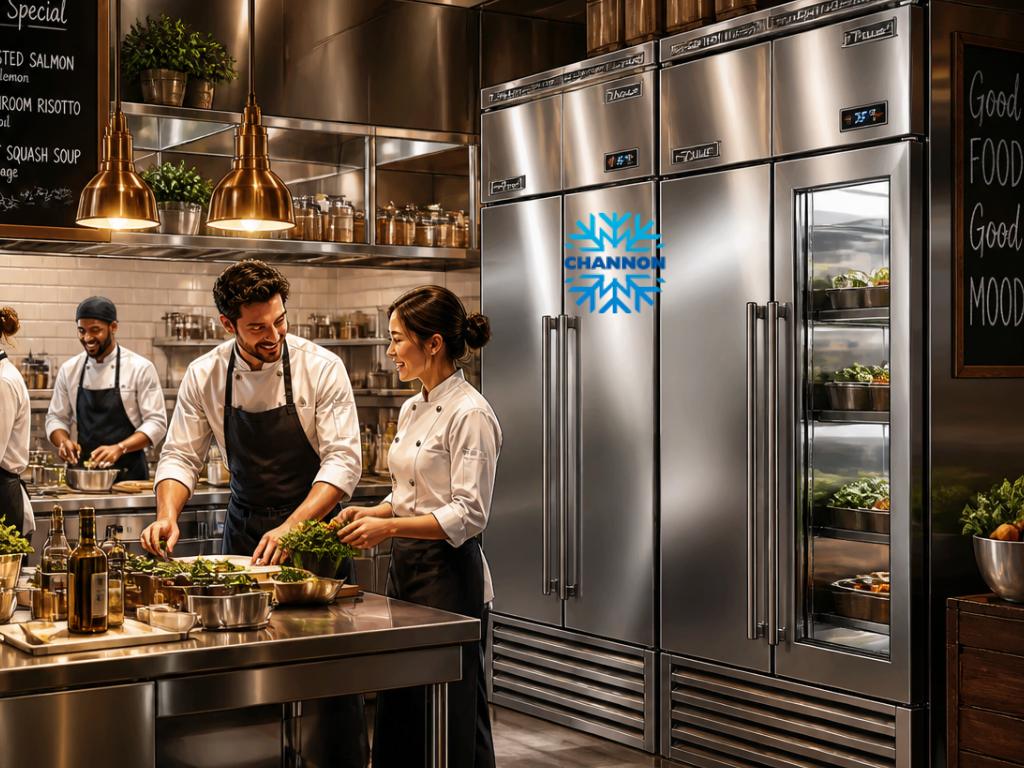
When refrigeration stops maintaining suitable temperatures, the first priority is determining whether stored food remains safe.
Check the actual temperature of affected potentially hazardous food using an accurate thermometer.
Record when the problem was discovered, relevant temperature readings and any known information about how long the food may have been outside safe temperature control.
Where appropriate, unaffected food can be transferred to functioning refrigeration without introducing further contamination.
However, placing food back into a working refrigerator does not automatically make it safe.
Decisions about continued use depend on the food type, temperature history and applicable food safety procedures.
Food should not be considered safe simply because it looks or smells normal.
If safe handling cannot be established, seek appropriate food safety advice and discard food where required.
A qualified refrigeration technician should assess equipment faults before the affected system returns to normal operation.
Understanding the Australian 2-Hour/4-Hour Rule
Australian food safety guidance includes the 2-hour/4-hour rule for managing potentially hazardous food held between 5°C and 60°C.
When the cumulative time in this temperature range is less than two hours, food may be used, sold or returned to suitable refrigeration.
If the total time is between two and four hours, the food may be used or sold immediately but must not be returned to refrigeration for later use.
After more than four hours, the food must be discarded.
The time is cumulative. It includes periods during preparation, transport, display and other occasions when the food is outside appropriate temperature control.
If the temperature history is unknown and safety cannot be established, the food should not be sold or served.
This rule is separate from the two-stage cooling requirements for freshly cooked potentially hazardous food.
Businesses should train staff to apply the correct procedure rather than treating all refrigeration problems as identical.
How Do You Choose Suitable Commercial Refrigeration Equipment?
Comparing Refrigerators, Freezers and Commercial Cool Rooms
Different commercial kitchens require different refrigeration systems.
Upright refrigerators provide chilled storage where floor space and vertical access suit the kitchen layout.
Underbench refrigerators keep ingredients closer to preparation areas, while refrigerated preparation benches combine storage with practical work surfaces.
Commercial freezers are designed for products requiring frozen storage, and display cabinets allow businesses to present suitable products while maintaining required conditions.
For businesses with larger storage requirements, commercial modular cool rooms may provide another option.
Equipment selection should consider usable capacity, temperature range, airflow, ventilation clearance, available space and the surrounding kitchen environment.
Channon offers a range of commercial refrigeration products, including upright and underbench refrigerators, freezers and refrigerated preparation equipment.
Businesses can review product specifications to identify options suited to their storage needs.
Comparing Refrigeration Suppliers, Sales and Leasing Options
When reviewing commercial refrigeration equipment for sale, businesses should compare more than the advertised purchase price.
Important considerations include temperature performance, internal dimensions, energy consumption, warranty conditions, installation requirements and ongoing servicing.
For operators researching commercial refrigeration sales sydney, supplier support and delivery arrangements may also influence the purchasing decision.
Some businesses prefer outright ownership, while others consider a commercial fridge lease or a commercial fridge on rent to manage upfront expenditure.
Channon provides refrigeration equipment purchasing options and information about rental and finance arrangements.
Before entering an agreement, confirm the total cost, payment terms, servicing responsibilities, equipment ownership and end-of-term conditions.
Availability and agreement terms depend on the selected product and provider.
The most suitable arrangement should meet the business’s storage requirements without overlooking long-term operating costs.
How Can Food Businesses Build a Better Refrigeration Safety Routine?
Creating a Practical Daily Food Storage Checklist
A reliable refrigeration routine helps staff manage food safety responsibilities consistently.
At the beginning of operations, relevant equipment readings and food temperatures should be reviewed according to the business’s procedures.
Staff should also check that refrigerator doors close correctly, food is appropriately covered and ventilation areas are not obstructed.
During food preparation, attention should be given to how long potentially hazardous ingredients remain outside refrigeration.
Stock should be labelled and rotated according to applicable storage and use-by requirements.
Cleaning and maintenance tasks should follow a suitable schedule.
When temperature readings are outside the required range, employees need clear instructions about recording the issue, assessing affected food and seeking assistance.
Commercial refrigeration equipment is only one part of this process.
Staff training, appropriate monitoring and consistent corrective actions are equally important.
Planning Long-Term Commercial Refrigeration Equipment Needs
Refrigeration requirements can change as a food business grows.
A café expanding its menu may need additional chilled storage, while a restaurant increasing food preparation volumes may require greater freezer capacity or specialised cooling equipment.
Before purchasing additional equipment, review how existing refrigeration is being used.
Consider available space, food quantities, temperature requirements and operating costs.
Service records can also help identify ageing equipment that needs closer assessment.
Repeated temperature problems may justify professional investigation before deciding whether repair or replacement is appropriate.
For businesses comparing refrigeration options, Channon can provide information about available products and purchasing arrangements.
Choosing suitable commercial refrigeration equipment involves balancing food safety requirements, practical kitchen use and ongoing maintenance.
By combining appropriate equipment with accurate temperature checks, safe storage practices and staff training, Australian food businesses can make more informed decisions and support safer food handling every day.
