Commercial refrigeration is one of the most important equipment decisions for a food business. Whether you run a café, restaurant, bakery, butcher shop, takeaway venue, catering business or food retail store, the right refrigeration helps protect stock, support workflow and keep food at suitable temperatures.
When people search for commercial refrigeration Sydney, they are often comparing products, suppliers, installation needs and long-term value. Some businesses need commercial fridges Sydney for everyday storage and display. Others need commercial modular cool rooms, a commercial blast chiller, or a blast freezer for faster chilling or freezing.
The best choice depends on your food type, available space, service style, stock volume and how your team works during busy periods. This guide explains what to consider before buying so you can make a more confident decision.
Why food businesses need more than a standard fridge
A household fridge is not designed for the same workload as a commercial kitchen or food retail environment. Commercial refrigeration equipment is made for frequent door opening, larger stock loads, faster recovery, stronger construction and daily business use.
In a busy Sydney café, a fridge may be opened many times each hour. In a restaurant, ingredients need to be stored safely but still remain easy for staff to access during service. In a butcher shop or deli, refrigerated display can also affect how products are presented to customers.
This is why choosing the right equipment matters. A commercial fridge, freezer or cool room should support the way the business operates, not just fit into an available corner.
How refrigeration supports daily operations and food safety
Refrigeration does more than keep food cold. It supports food safety, product quality, stock rotation and daily preparation. Food Standards Australia New Zealand states that Standard 3.2.2 sets requirements for keeping potentially hazardous food under temperature control, including cooling and reheating requirements.
For food businesses, this means refrigeration should be treated as an operational system, not just a storage cabinet. If equipment is too small, poorly positioned or unsuitable for the food being stored, staff may struggle to manage stock properly during busy periods.
A reliable refrigeration setup can also help reduce pressure during service. When ingredients are easy to access and stored in the right place, the kitchen or service area can work more smoothly.
Common Types of Commercial Refrigeration Equipment
Commercial fridges, freezers and display units
Commercial fridges and freezers come in different forms, including upright storage cabinets, underbench units, glass-door display fridges, bar fridges, preparation fridges and chest freezers. Kitchen Equipment Australia lists common commercial refrigeration options such as upright fridges and freezers, under-counter refrigeration, display fridges, blast chillers, chest freezers and bar fridges.
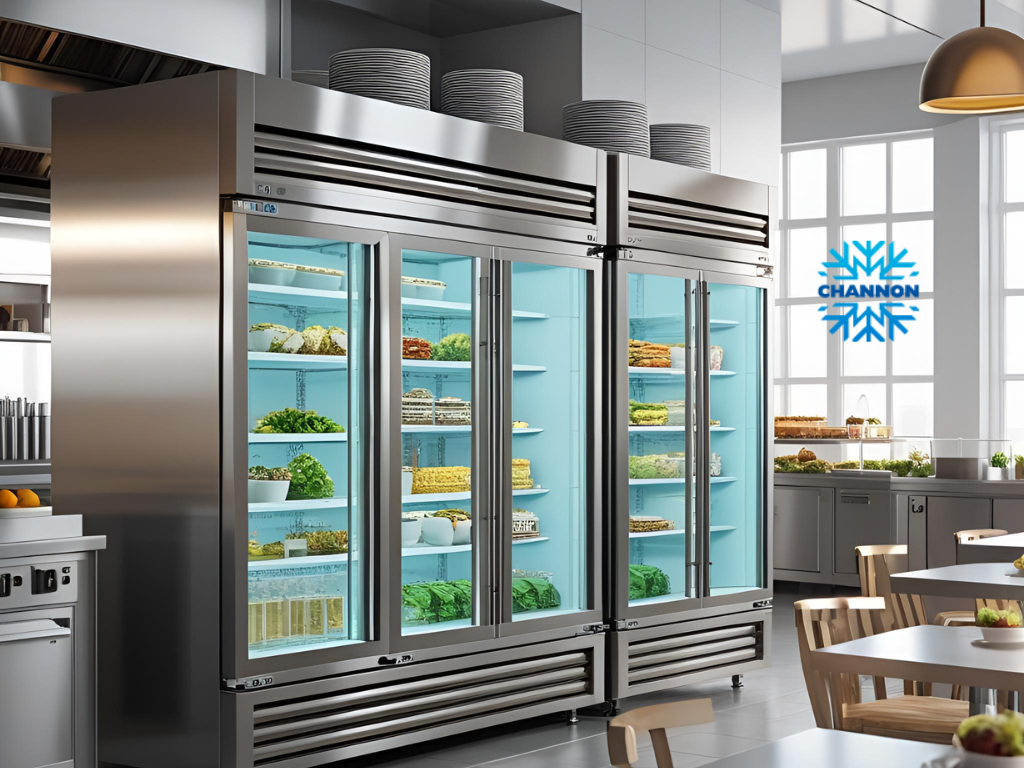
The right choice depends on how the equipment will be used. A glass-door fridge may suit drinks or packaged food display. An underbench fridge may suit a compact café kitchen. An upright storage fridge may suit back-of-house ingredient storage.
Before choosing, think about what will be stored, how often staff need access and whether the unit is for storage, display or preparation.
Cool rooms, blast chillers and blast freezers
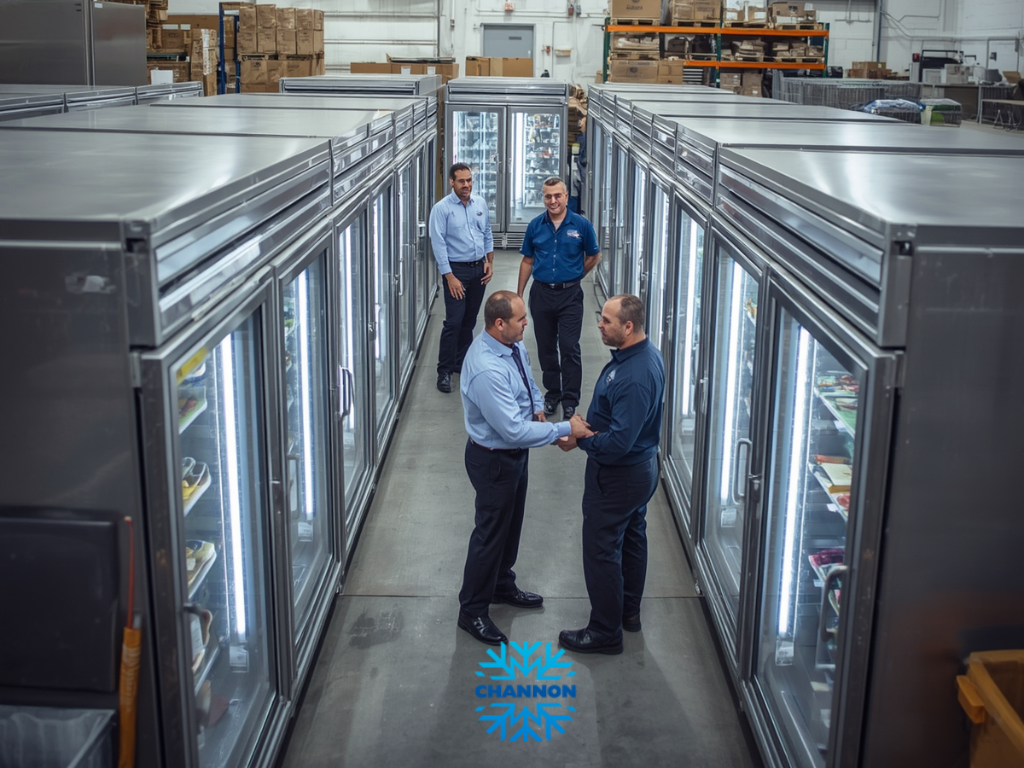
Commercial modular cool rooms are useful when a business needs more storage than standard cabinets can provide. They can suit restaurants, butchers, catering businesses, bakeries, clubs, food producers and venues with high stock volume.
A commercial blast chiller is different from a standard fridge because it is designed to cool cooked food quickly. A blast freezer is used when food needs to be frozen faster than it would be in a standard freezer. Suppliers commonly position blast chillers and blast freezers for caterers, hospitals, pubs, airlines, schools and event caterers that cook and then chill or freeze food.
If your business prepares food in batches, stores cooked items or needs tighter control over cooling processes, these products may be worth discussing with a supplier.
Matching Refrigeration to Your Business Type
Cafes, restaurants, bakeries, butchers and caterers
Different businesses need different refrigeration layouts. A café may need underbench fridges for milk, display fridges for cakes and upright storage for back-of-house ingredients. A restaurant may need preparation fridges, freezer storage and a cool room for larger ingredient volumes.
A butcher may need display refrigeration, cool room storage and reliable temperature control for fresh meat. A bakery may need refrigeration for cream, fillings, dough or prepared products. A caterer may need blast chilling, freezing and transport-ready storage depending on the type of food being prepared.
The main point is that commercial refrigeration equipment should suit the actual workflow of the business. A product that works well in one venue may be inconvenient in another if the layout, access or stock volume is different.
How storage volume, workflow and menu size affect the choice
Storage volume is one of the first things to consider. If the unit is too small, staff may overload shelves or store items in the wrong place. If it is too large, the business may spend more upfront and use more space than needed.
Workflow is just as important. A fridge should be located where it supports staff movement. A display fridge should be easy for customers to see and staff to manage. A cool room should allow safe access, practical shelving and clear stock rotation.
Menu size can also affect the choice. A venue with a broad menu may need more separated storage areas than a venue with a smaller menu. If your business plans to expand, it may be worth choosing equipment that can support future demand.
What to Consider Before Buying Equipment
Size, capacity, access, installation and power requirements
Before buying commercial refrigeration equipment for sale, measure the available space carefully. This should include width, depth, height, ventilation clearance and door swing. It is also important to check how the equipment will be delivered into the site, especially if there are stairs, narrow entries, lifts or tight kitchen access.
Capacity should match the type and amount of stock you need to store. A unit that looks large externally may not always provide the internal shelf space you expect. Ask for internal measurements, shelf details and storage capacity before buying.
Power requirements should also be checked before installation. Some equipment may need specific electrical arrangements.
Energy use, service support and long-term running costs
The purchase price is only one part of the decision. Commercial refrigeration runs for long periods, so energy use, reliability and servicing can affect long-term value.
Ask about energy performance, warranty, parts availability, service support and maintenance requirements. Also ask how the unit should be cleaned and what checks are needed to keep it running properly.
A cheaper unit may not always be the best choice if it is difficult to service, unsuitable for heavy use or not the right fit for the venue. On the other hand, a higher-priced unit should be clearly justified by quality, suitability, features or support.
How to Choose the Right Product or Supplier

Comparing commercial refrigeration equipment for sale
When comparing commercial refrigeration sales Sydney options, look beyond the product name. Two fridges may look similar but have different capacity, door style, shelving, temperature range, ventilation needs and service access.
A good comparison should consider the type of food being stored, the required temperature range, display needs, available space and how often staff will open the unit. If you need a display fridge, visibility and presentation matter. If you need storage refrigeration, capacity and durability may matter more.
For cool rooms, blast chillers and blast freezers, product selection should be even more careful. These systems can affect workflow, stock management and food safety procedures.
What to ask before making a purchase
Before buying, ask the supplier whether the equipment suits your business type, whether it can handle the expected workload and whether installation conditions have been checked. Ask what warranty applies, how servicing works and whether spare parts are available.
It is also useful to ask whether the supplier can explain the difference between similar products. For example, a café may not need the same refrigeration setup as a butcher, and a caterer may need different chilling capacity from a small takeaway shop.
The right supplier should help you narrow the choice rather than simply sell the largest or most expensive unit. Clear advice at the buying stage can prevent practical problems later.
When to Contact Channon
When expert product advice is useful
Channon can be mentioned naturally when a business needs help comparing commercial refrigeration equipment and choosing a practical option for the site. This is useful when you are unsure whether you need a commercial fridge, freezer, display unit, cool room, commercial blast chiller or blast freezer.
Product advice is especially helpful before opening a new venue, upgrading old equipment, changing a menu, expanding storage, improving display, or replacing equipment that no longer keeps up with demand.
A helpful supplier should ask about your business type, available space, food storage needs, service style and budget before recommending equipment. This makes the decision more practical and less confusing.
How a supplier can help with practical equipment selection
A supplier can help you compare size, storage capacity, temperature needs, door style, shelving, installation requirements and future servicing. They can also explain whether a modular cool room, display fridge, upright cabinet or underbench unit is the better fit.
This kind of guidance matters because refrigeration is not a one-size-fits-all purchase. A bakery, butcher, restaurant and café may all need different solutions even if they are searching for similar commercial refrigeration terms online.
Planning for Maintenance, Growth and Future Needs

Why ongoing care matters after installation
Commercial refrigeration needs ongoing care after installation. Doors, seals, coils, vents, drains, shelves and temperature performance should be monitored as part of regular business operations.
Good maintenance helps identify issues before they become serious. It can also help staff notice early signs such as temperature changes, unusual noise, ice build-up, poor door sealing or slow recovery after busy periods.
However, maintenance cannot guarantee that equipment will never fail.
Internal linking opportunities and next steps
This article can naturally link to related pages such as commercial ovens, commercial dishwashers, commercial kitchen equipment, commercial refrigeration equipment, cool rooms, blast chillers, blast freezers and kitchen fit-out equipment.
The next step is to review how your business stores, prepares and displays food. Consider your current stock volume, available space, equipment age and future plans. If your refrigeration is too small, difficult to access, unreliable or no longer suitable for your menu, it may be time to compare commercial refrigeration options and speak with a supplier.
A well-chosen refrigeration setup should support food safety, staff workflow and day-to-day business operations without adding unnecessary complexity.
