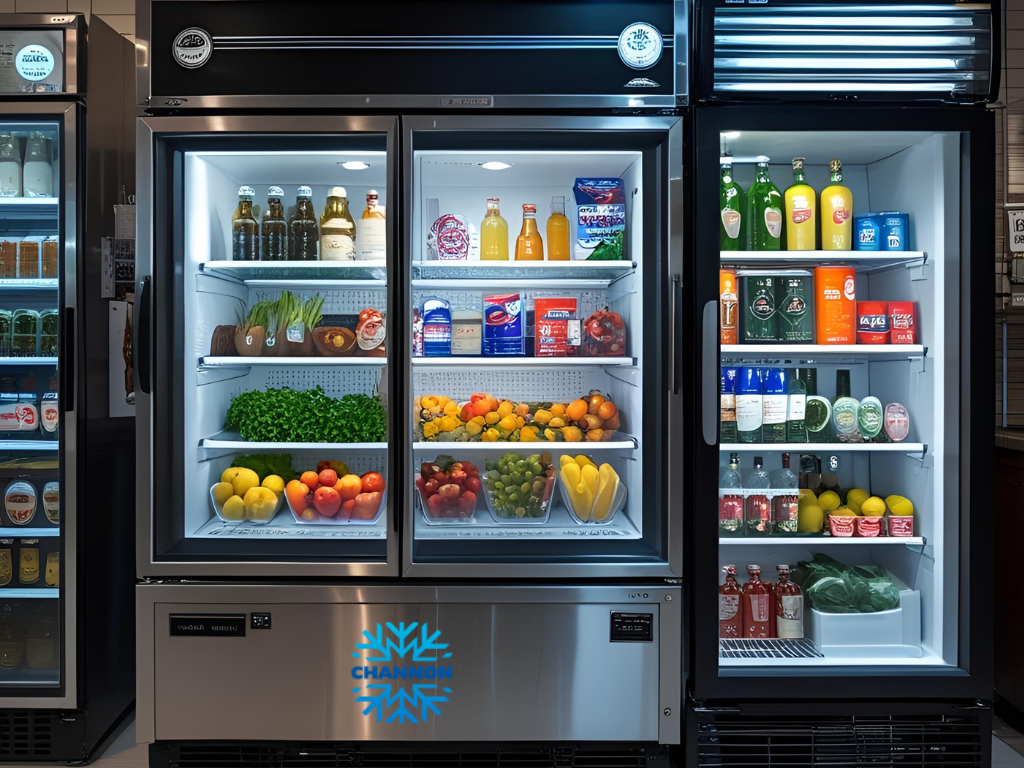
Buying refrigeration for a commercial kitchen is very different from choosing a household fridge. A restaurant, cafe, club, supermarket or catering business may depend on its equipment for long operating hours, frequent door openings, large stock loads and consistent temperature control.
That means the lowest purchase price is rarely enough information to make a good decision.
When comparing commercial refrigeration sydney options, it is worth looking at what the equipment needs to store, the temperature required, daily workload, available floor space, energy performance, installation conditions and how easily the unit can be maintained later.
Food safety also needs to be part of the decision. Food Standards Australia New Zealand states that potentially hazardous food generally needs to be stored at 5°C or colder, unless the business can demonstrate that another temperature is safe. Businesses should check the actual food temperature rather than relying only on a refrigeration unit’s display.
Choosing well therefore starts with the business requirement, not with the equipment catalog.
Match the equipment to the food or product
Before looking at brands, dimensions or prices, identify exactly what will be stored.
A cafe keeping milk, desserts and sandwich ingredients chilled has different requirements from a butcher holding fresh meat, a restaurant freezing bulk stock or a catering business rapidly cooling cooked food.
This distinction matters because commercial refrigeration equipment is designed for different purposes. A refrigerated cabinet maintains cold food. A freezer keeps products frozen. A commercial blast chiller is designed to reduce the temperature of prepared food rapidly, while a blast freezer is used where rapid freezing is required.
A display cabinet adds another consideration because customers need to see the product while the equipment continues maintaining suitable conditions.
It is therefore useful to write down the products the equipment needs to hold and the temperature conditions they require before asking suppliers for recommendations.
For businesses handling potentially hazardous food, the refrigeration choice also needs to support the business’s food-safety controls. FSANZ advises that potentially hazardous foods should generally be stored at 5°C or colder, while frozen food should remain frozen hard.
The equipment should support those requirements under the conditions in which your business will actually use it.
Estimate capacity from real stock levels
Cabinet volume alone does not tell you whether a refrigerator will suit the business.
Consider how much stock you normally hold, how often suppliers deliver, how stock levels change on busy days and whether the business is expected to grow.
A cafe receiving fresh deliveries every morning may not require the same storage volume as a restaurant buying several days of ingredients at a time.
You also need usable space inside the cabinet.
Food cannot simply be packed into every available gap. FSANZ warns that refrigerators may not work properly when overloaded or when food is packed so tightly that cold air cannot circulate.
This means buying an undersized cabinet and filling it completely can work against the very temperature control the business is trying to maintain.
At the same time, purchasing substantially more capacity than you are likely to need is not automatically better.
The aim is to choose enough practical capacity for normal operation, busy periods and realistic growth without filling valuable kitchen space with unnecessary refrigeration.
Check the Required Temperature and Cooling Performance
One of the most important buying questions is what the refrigeration actually needs to do.
Normal refrigerated storage is designed to keep already chilled food cold. A freezer maintains frozen products. Rapid cooling is a different process.
Australian food-safety requirements are particularly relevant when cooked potentially hazardous food is being cooled for later use. FSANZ guidance says cooked food should generally be cooled from 60°C to 21°C within two hours and then from 21°C to 5°C within a further four hours.
A commercial blast chiller can be relevant to businesses that regularly need controlled rapid cooling, but that does not mean every cafe or restaurant automatically needs one.
Likewise, a blast freezer should be selected because the business has a genuine rapid-freezing requirement, not simply because it sounds more capable than an ordinary commercial freezer.
Channon currently lists refrigeration, refrigerators, freezers and blast chiller/shock freezer equipment within its commercial range, illustrating that these are different equipment categories rather than interchangeable products.
Explain your food process to the supplier instead of asking simply for “a commercial fridge”. That gives them a much clearer basis for recommending suitable equipment.
Think about performance during the busiest part of the day
Equipment should be judged by the environment in which it will operate.
Commercial fridges sydney businesses use in busy kitchens may face frequent door opening, warm ambient conditions and repeated stock movement throughout service.
For example, a refrigerator positioned beside cooking equipment may experience a very different surrounding temperature from one installed in a cool storeroom.
Staff behavior also matters. Doors repeatedly left open allow cold air to escape. Loading large quantities of warm food can temporarily increase the cooling demand. Blocking internal airflow can also make temperature distribution less consistent.
This is why the advertised temperature range is only part of the specification.
Ask whether the unit is suitable for the expected ambient environment, workload and frequency of access.
After installation, businesses should also check the temperature of food itself. FSANZ specifically advises against relying only on fixed equipment gauges and recommends using an appropriate probe thermometer to verify actual food temperatures.
Measure the Space Before Choosing the Equipment
Check more than width, depth and height
It is easy to measure an empty section of wall and assume that any refrigerator fitting those dimensions will work.
Commercial equipment needs more consideration.
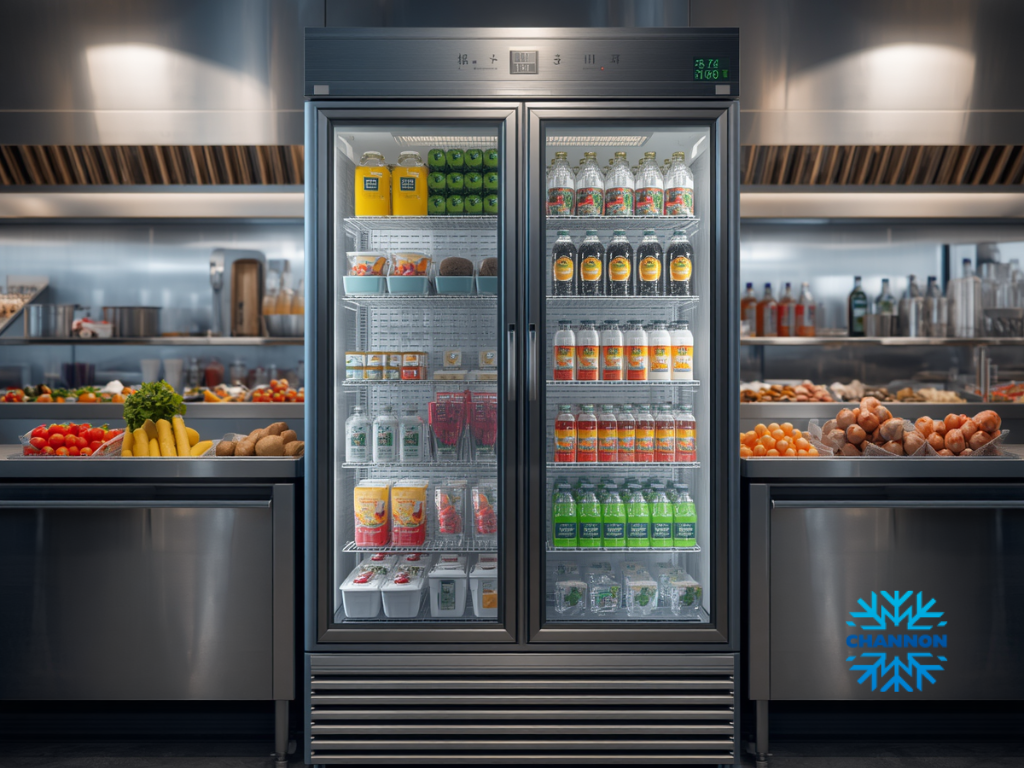
Allow for door opening, handles, ventilation clearances, nearby benches and staff movement. The manufacturer’s installation requirements should determine the necessary space around the equipment.
Think about workflow as well.
A refrigerator door that opens directly into a narrow staff walkway may technically fit but still create problems during a busy service.
Equipment also needs to be positioned so it can operate as intended. Blocking ventilation or placing refrigeration where heat cannot dissipate properly can affect performance and energy use.
The Australian Government’s refrigeration guidance emphasizes correct system design and maintenance and notes that heat-exchange components and airflow are important to efficient operation.
For larger commercial refrigeration equipment, it can be sensible to have the installation location reviewed before placing the order.
Make sure the equipment can reach the installation area
The final space may be large enough while the route to it is not.
Measure entrances, hallways, loading areas and any internal doors the equipment must pass through.
Older hospitality premises can have particularly tight access. A large upright refrigerator may fit comfortably in the kitchen once installed but be impossible to move through the doorway without removing components or changing the delivery plan.
Stairs, lifts and changes in floor level may also matter.
For a replacement unit, do not assume that because the old refrigerator came in years ago, an equivalent modern model will have identical dimensions.
Measure again.
Large commercial modular cool rooms involve a different type of planning because the available floor area, ceiling height, panel layout, doors, refrigeration plant and surrounding services can all influence the installation.
Channon currently promotes commercial modular cool rooms as part of its refrigeration offering and identifies custom dimensions and different temperature applications among the options it discusses.
For this kind of project, site planning should happen before the final equipment specification is locked in.
Compare Energy Use and the Ongoing Cost of Ownership
Refrigeration can operate continuously, so the cost of ownership continues long after the invoice is paid.
The Australian Government reports that refrigeration can account for between 25% and 85% of total energy use in some businesses that rely heavily on cooling equipment. The exact share naturally varies by operation, but it shows why energy performance deserves attention during purchasing.
When comparing commercial refrigeration equipment for sale, check available energy information rather than comparing purchase prices alone.
The Australian Government has energy-efficiency requirements covering various refrigerated cabinet categories and provides an Energy Rating registration database that can be useful when comparing regulated equipment.
Also consider how the unit will be used.
An efficient refrigerator that is badly located, poorly maintained or constantly overloaded may not perform as intended.
This is why whole-of-life value should include energy consumption, servicing, expected workload and suitability for the application rather than simply asking which unit costs the least today.
Avoid choosing an oversize system without a practical reason
Buying larger equipment “just in case” can sound sensible, particularly if a business expects to grow.
Some spare capacity can certainly be useful, but excessive over sizing has drawbacks.
Larger cabinets take up more floor space, and a larger refrigeration system can increase both capital and operating costs. The Australian Government’s refrigeration guidance recommends selecting systems according to actual requirements rather than treating bigger as automatically better.
A better approach is to estimate present demand and foreseeable growth.
If the business is opening with 40 seats but has approved plans to expand to 80 shortly, future capacity clearly matters.
If expansion is only a distant possibility, buying twice the required refrigeration capacity today may not be justified.
This is another reason commercial refrigeration sales sydney discussions should begin with the business model, stock turnover and operating pattern rather than a preferred cabinet size.
Decide Which Refrigeration Format Fits the Workflow
Compare cabinets, freezers, cool rooms and specialist equipment
Different refrigeration formats solve different problems.
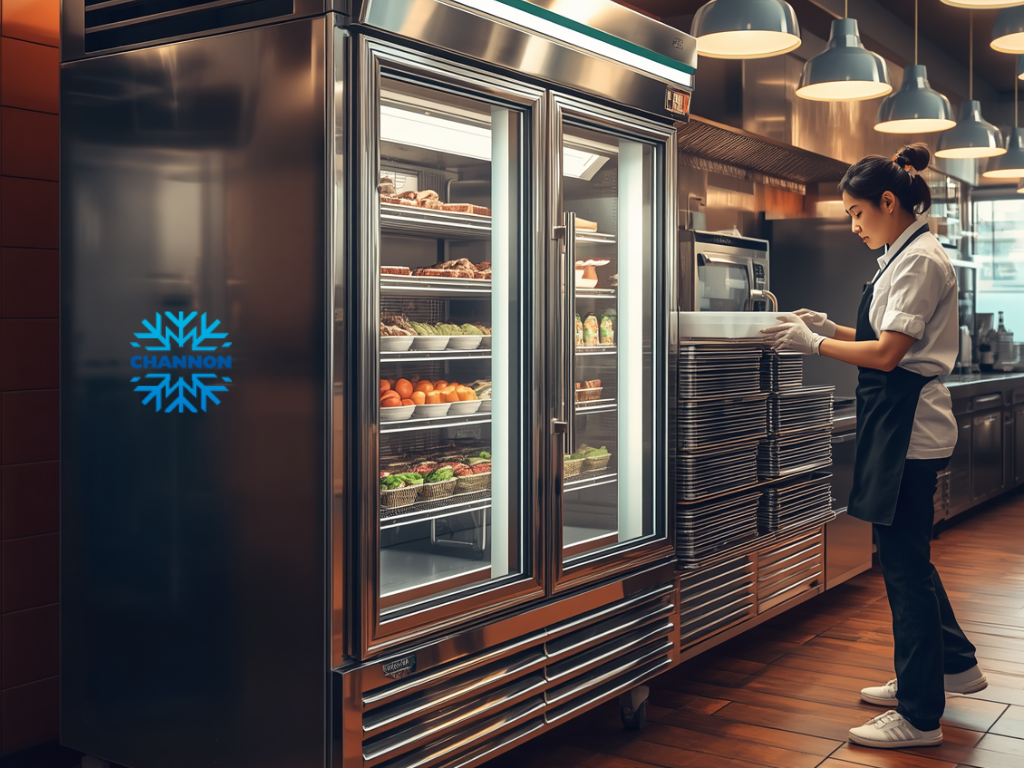
An underbench refrigerator can keep frequently used ingredients close to the preparation area. An upright cabinet can provide more vertical storage without requiring a large floor footprint. Display refrigeration may be necessary when customers need to view products.
Commercial modular cool rooms become relevant when the business needs larger walk-in storage capacity, particularly where stock volumes exceed what several individual cabinets can conveniently manage.
Rapid cooling is different again.
A commercial blast chiller may suit food-production operations that need to cool cooked products within controlled timeframes, while a blast freezer serves a rapid-freezing function.
Channon’s current product range includes refrigerator and freezer categories as well as blast chilling/freezing equipment, while its broader business offering includes modular cool rooms.
The point is not that one format is superior.
The correct choice depends on what needs to be stored, how staff access it, required temperatures, daily volume and how the food moves through the business.
Choose around staff workflow as well as storage volume
Two kitchens needing the same total cold-storage capacity may still require very different layouts.
A busy cafe may benefit from smaller refrigeration placed directly underneath preparation benches so milk and ingredients remain close to staff.
A restaurant receiving larger deliveries may prefer central bulk storage in a coolroom combined with smaller service refrigerators near each workstation.
Think about the path food takes from delivery to storage, preparation, cooking and service.
If staff constantly walk across the kitchen to retrieve ingredients, the refrigeration layout may be adding unnecessary movement.
Door direction also matters. So does shelving arrangement and how frequently different products need to be accessed.
A refrigeration specialist can be particularly useful when equipment purchasing is part of a larger kitchen fit-out rather than a simple one-for-one replacement.
Channon currently describes its business as covering commercial refrigeration alongside kitchen design and fit-outs in Sydney, so involving the company at the planning stage can be relevant where refrigeration needs to work with the overall kitchen layout.
Check Installation, Refrigerant, Warranty and Service Access
A quoted equipment price may not necessarily represent the complete installed cost.
Before accepting an offer, confirm what is included in delivery, positioning, installation and commissioning.
Check the electrical supply required. Some larger commercial equipment may need power arrangements that differ from an ordinary plug-in appliance. Drainage or other services may also be necessary depending on the unit.
Warranty conditions deserve the same attention.
Find out how long the manufacturer’s warranty lasts, what parts and labour it covers, who performs warranty service and whether there are installation conditions that need to be met.
Refrigerant is also worth discussing when buying new equipment.
Australia has been progressively reducing allowable bulk HFC imports since 2018 and will reach 15% of the baseline level by 2036. Importantly, the Government states that this phase-down does not force businesses to replace existing HFC equipment, and technicians can continue purchasing HFCs to maintain existing systems. However, manufacturers are increasingly introducing equipment using alternative refrigerants.
For a new purchase expected to remain in service for many years, asking which refrigerant the equipment uses and how it fits into long-term servicing plans is therefore reasonable.
Make sure technicians can service the equipment later
A refrigerator that fits perfectly against three walls may become difficult to repair if technicians cannot reach the components that eventually need attention.
Before installation, ask where the condenser, compressor, controls, filters and other serviceable components are located and how technicians will access them.
Maintenance access should be treated as part of the floor plan.
This is particularly important for built-in equipment and commercial modular cool rooms where refrigeration components may be integrated into a larger installation.
The Australian Government advises businesses to maintain refrigeration equipment regularly because dirty or poorly maintained components can increase energy use and reduce system performance.
Service support should therefore form part of supplier comparison.
Channon currently states that its refrigeration technical service and installation departments operate 24 hours a day, 365 days a year, and its Kingsgrove operation provides breakdown and routine maintenance support.
For a business that depends heavily on refrigeration, understanding what happens after the equipment is purchased can be just as important as comparing the initial specifications.
Speak With a Refrigeration Specialist Before a Major Purchase
Get advice when the requirement is more than a straightforward replacement
Replacing an existing cabinet with a genuinely equivalent unit can sometimes be relatively straightforward.
A major upgrade deserves more planning.
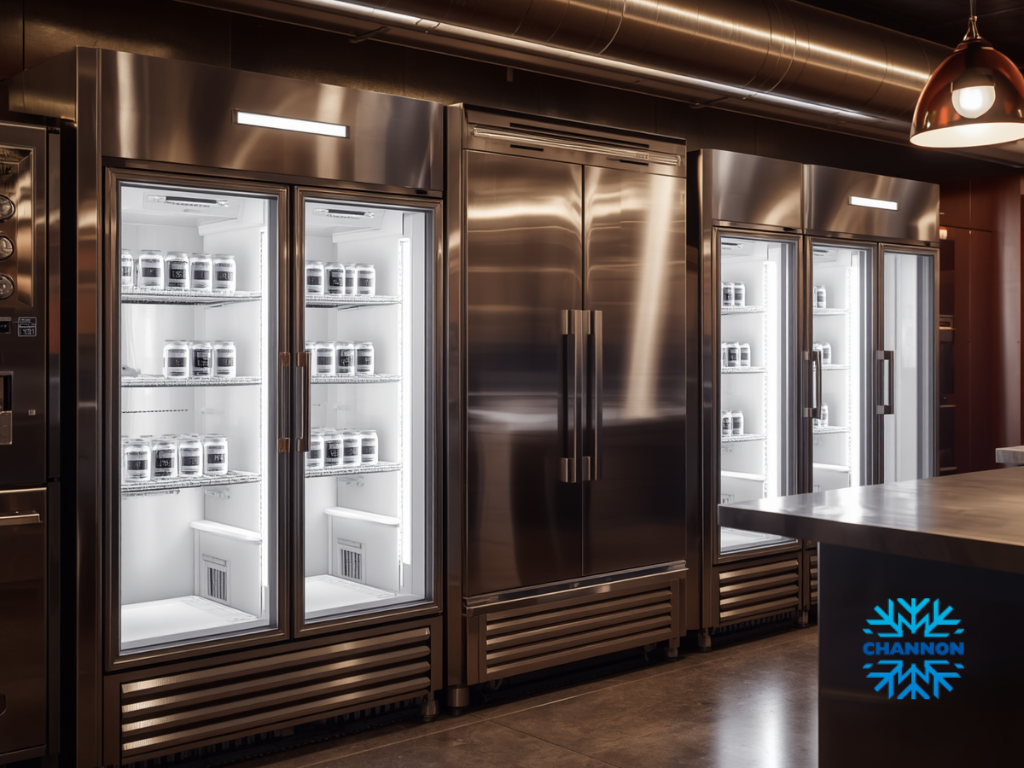
Speak with a refrigeration specialist when the business is expanding capacity, installing a coolroom, changing kitchen layout, adding rapid chilling or freezing, or replacing several pieces of ageing equipment at the same time.
The conversation is also useful if the existing refrigeration regularly struggles during busy periods.
Rather than assuming the solution is simply a larger fridge, a technician or equipment specialist can consider capacity, location, airflow, temperature requirements and how the business uses the system.
For Sydney hospitality businesses, Channon supplies commercial refrigeration and catering equipment from Kingsgrove and currently lists refrigerators, freezers, refrigeration products, blast chiller/freezer equipment and modular coolroom solutions within its broader offering.
That makes contacting Channon relevant when a buyer needs help comparing several refrigeration formats rather than purchasing a predetermined model.
Give the supplier enough information to make a useful recommendation
The quality of the recommendation depends partly on the information you provide.
Start by explaining the type of business and what products need refrigeration. Describe normal stock levels, busiest periods, delivery frequency and required temperatures.
Give accurate measurements of the available area and explain any access limitations.
Mention the operating environment, particularly if the equipment will sit inside a hot commercial kitchen or another demanding location.
If you are considering a commercial blast chiller or blast freezer, explain what food you need to process, typical batch sizes and how often rapid cooling or freezing will occur.
For a coolroom, discuss stock volume, shelving, door access and any expected growth.
Finally, ask about energy performance, installation requirements, refrigerant, warranty and future servicing.
These questions allow commercial refrigeration sydney suppliers to compare equipment against a real operating requirement rather than simply selecting a model from a catalog.
The best commercial refrigerator is therefore not necessarily the biggest, newest or most expensive option.
It is the equipment that provides the required temperature control, workable capacity and suitable access while fitting the physical space and daily workflow of the business.
Taking time to check these details before buying can make it easier to compare quotations properly and understand the full cost of the refrigeration system you are considering.
For food businesses, the final decision should also support safe food handling. No matter which equipment is purchased, continue checking actual food temperatures and maintaining the refrigeration system rather than assuming that a digital cabinet display alone guarantees safe storage.
